Another ACT Success Story

A direct quote from a student and more proof that hard work and determination pay off: 

I wanted to give you the fantastic news that after my last ACT, with super scoring from my past tests, I now have a 32! I did what we hoped for and improved both my Reading and English from 33 and 34 to 35 in both! And I improved my math score 4 points to 28! So, with my original 31 in Science, 35 in English and Reading and 28 in Math all from this most recent test, my Super score improved to 32!!

Thank you for your patience, your diligence, and your dedication to help me do my best and build confidence in myself. It's giving me great hope for the future and I can't wait to keep updating you on what happens with college apps.


This particular student put in the time to improve. 

When she started working with CROSSWALK, she was scoring in the high teens on the ACT. One year later and she is in the 30s. What a difference a year of consistent and quality practice makes. 

There really is no secret to improving your ACT or SAT. If you are willing to put in the work and you have the time to do so, you too can experience a significant score increase. 

If you need some guidance along the way, contact CROSSWALK. We offer private tutoring and small group classes for SAT, ACT, PSAT, SSAT and more. 

Learn more here

Most Important Rate Problem for SAT and ACT

Rate problems are common on the SAT or ACT. Calculate the rate of a train traveling x miles in y hours, for example. Or how many hours will it take to mow the lawn if 8 people can mow the lawn in 6 hours but 3 people take the day off? 


While knowing how to solve these rate problems will help, there is one rate problem that is by far the most important: how many points can you score per minute? 

Points per minute is the most important rate to consider when taking the SAT and/or ACT. The name of the game is scoring points, i.e. getting correct answers, but the game is only played when you factor in the timing. 

A question I often ask students after a practice set: do you have more test at the end of the time or do you have more time at the end of the test?

Answers to this question represent an opportunity for a student. The student that has more test at the end of time needs to find ways to move faster through questions and to get to more point scoring opportunities. The student that has more time at the end of the test can learn to slow down and use extra time to double check answers. 

It is all about how many points you can score per minute of the test. 

Another consideration when looking at points per minute: should you read the directions for each section on test day? By reading the directions on test day, minutes move but points do not. Instead, read the directions before the test (don’t worry, they won’t change) and get right into scoring points on test day. 

Since most questions allow about a minute per question (give or take depending on the section and not accounting for any testing accommodations), an ideal rate could be 1 point per minute. ACT Math, for example, is 60 questions in 60 minutes. At a 1 point per minute rate, you could achieve a perfect score. 

While perfection may be rare, a good goal can be to maximize your points per minute. It’s not just points, its points per minute. It takes a bit of a mindset shift to look at the SAT and ACT as a points per minute rate problem but this is the most important rate problem on the test. 

For SAT, ACT, SSAT, PSAT and academic support, contact CROSSWALK

Skype or Face-to-Face Tutoring: What is Better?

Call me an old codger but when I first heard about Skype tutoring, I was dubious. I thought face-to-face tutoring would always be the best way to teach and learn.

Years later, I am changing my tune.

After working with clients both online and in person, I find that Skype tutoring can be as effective as face-to-face tutoring. In fact, in some cases, Skype tutoring might even be more effective.

Consider the following four reasons why Skype tutoring could be better than face-to-face tutoring:  

1) Better Use of Time: Assuming a family would have to travel to a tutoring session, a sessions via Skype can be a better use of time. We typically offer 90-minute sessions. If a family has to travel to the lesson, one 90-minute session might actually take two hours or more including travel time.

2) Less Stress: Driving kids around to all of their various commitments is stressful. Not just for you but for kiddos as well. Even the most organized schedules are not stress-proof. Since the goal of test prep is to reduce as much stress as possible, Skype tutoring offers a less stressful approach that won’t have mom and dad schlepping kiddos and supplies all over town.

3) Save Money: Skype tutoring can often be more economical. If our tutors don’t have to travel to a client’s home or other location for the class, we can charge less per hour to the family. Charging less allows the family to save money or even schedule more sessions.

4) Same Results: We don’t have a statistically significant sample size of Skype clients vs face-to-face clients. Nevertheless, over the past five years, we have seen improvements of equal amount with students that work via Skype and students that work face-to-face. The common denominator is always how much quality work the student does in between sessions. The more practice sets a student can do over time, the more comfortable they will become. This has nothing to do with meeting a tutor in person or online.

Ultimately, two main factors remain determine test improvement: time and motivation. Regardless of online or in person tutoring sessions, a student who has both the time and the motivation to put in the work will see a score improvement.

To set up a Skype or face-to-face tutoring session, contact CROSSWALK today. CROSSWALK offers private tutoring, boot camps and group classes for SAT, ACT, PSAT and SSAT.

The First Step in SAT and ACT Prep

Preparing for the ACT and/or SAT can feel like a journey of a thousand miles. And a journey of a thousand miles begins with a single step, right?

The good news is that the first step in SAT and ACT prep is the easiest step of all.


The first step is to assess where you are presently. Like the doctor who runs a diagnostic test to see what ails or does not ail a patient, a student should do a practice test to see what strengths and weaknesses s/he has. 

An official SAT or ACT test may be the most informative way to do this. Register and take an official SAT or ACT and request a detailed score report. This detailed score report will highlight what a student does well and what s/he should work on for the next iteration. 

Even an unofficial practice test can be a valuable experience. Download a practice test from the ACT or SAT websites and be sure to download the scoring documents as well. After taking the test, score and analyze the test to identify areas of strength and weakness. 

To make your first step on the test prep journey even easier, CROSSWALK will do a FREE score analysis for you. Send CROSSWALK your detailed score report or a practice test score sheet and we will give you 3-5 tips and strategies to work on for next time. For free

Contact CROSSWALK today for more details and do let us know how we can help in your test prep journey. 


Perfect Test Scores Never Enough

Your test score is only one piece of the college admission pie. 

My students know this the first day we start sessions. And I repeat this mantra over and over. 

The first reason I share this statement with students is to reduce any stress and anxiety they have about the SAT, ACT, PSAT, SSAT or other standardized test. 

Since stress is the enemy of test performance, it is important for students to understand that their test score does not determine everything about the potential for college acceptance. 

The second reason I share this with my students is so that they start to build out the rest of the pie. Admission decisions are based on test scores, GPA, essays, letters of reference, interviews, portfolios and more. Since test scores are only one piece of this, I encourage my students to work on the other pie pieces in conjunction with test scores. 

A college counselor friend of mine likes to tell the story of a student who did not have the test scores for UC Berkeley, or so he thought. He helped his client apply to UC Merced in addition to UC Berkeley so that we would have a viable back up option. His test scores indicated that acceptance to UC Merced was highly probable. Turns out the student did not get accepted to UC Merced but got accepted by UC Berkeley. Something happened along the way that had nothing to do with test scores. 

Another story worth noting happened recently at Harvard. The school rescinded the admission of ten students after the school learned the students had posted obscene messages on Facebook. These students undoubtedly had excellent test scores but test scores were not enough.  

Test scores can matter but a perfect score is not enough. Be sure you work on all aspects of your application, not just the measurable ones. 

For more test prep advice, contact CROSSWALK today. 

Parents Struggling to Understand Teens Need to Read This

This may not be entirely test prep related but certainly applicable and valuable to anyone with a teenager or anyone working with a teenager:

Why Is Your Teenage Acting So Weird? 

Some good food for thought particularly as it relates to how to best support your teen during their prime learning years. 

The path towards learning success has much to do with understanding how the brain develops and works.

For study advice, test prep help or any other learning suggestions, contact CROSSWALK. We offer tutoring, boot camps and academic support in just about any subject. 

Perfect Rebuttals for the Objectionable Reader

My students and followers of this blog hear me repeat all the time that standardized tests are simply reading tests. Don’t get confused by grammar, science or math sections of the test. Since each section of the test requires excellent reading comprehension skills, the test is essentially a reading test. 

And as my students know, one way to get better at a reading test is more reading


Nevertheless, sometimes simply explaining the connection between reading and test scores is not enough to motivate a student to read. Objectionable readers come up with excuses to avoid reading. 

Luckily most excuses to avoid reading are predictable. They typically fall into three categories: lack of interest, lack of knowledge and lack of time. 

Just like a salesperson prepares rebuttals for objectionable customers, here are three rebuttals for the most common reading excuses. 

Excuse: Reading is boring. 

Rebuttal: Reading is only boring when the material is boring. Find something interesting to read and reading will be interesting. The beauty of reading is that if you are not interested in the story or book, you can put it down and find another one. Pick books, stories or magazines that are interesting to you. Don’t judge all reading by one book. If you are curious about something, find a book about it! 

Excuse: I don’t know what to read.

Rebuttal: There are many ways to find out what you can read. Ask a friend. Ask a teacher. Ask a librarian. And per the previous rebuttal, read what is interesting. You can even read things in different formats. Graphic novels, audio books and e-books are all ways to approach reading. Find what works for you and go from there. Pick an author or a genre and try it out. If you don’t like it, pick another. If you like it, keep reading books from the author or in that genre. 

Excuse: I don’t have time to read. 

Rebuttal: Reading doesn’t take much time. Twenty minutes a day will go a long way. Try reading for ten minutes in the morning when you first wake up as a way to ease into the day. Or find a pocket of time during the day to pick up a book. That could be when you are waiting in line, during a car ride or just sitting around. Sacrifice a small portion of your television or gaming time and make reading part of your routine.

Read, read and read. You have heard it before: more reading means increased test scores. Now you have some solid rebuttals if you or your student objects to reading. 

For more tips on how to improve your SSAT, SAT, ACT, PSAT or GPA, contact CROSSWALK today. 


CROSSWALK Sponsors Olympic Day

A big thanks goes out to Tim Hutten and his fellow olympians for hosting the inaugural Olympics Day on Saturday at Hartnell College.

Tim and a handful of olympians put on an excellent morning of exercise, nutrition and inspiration for local youth. Athletes representing water polo, diving, triathlon, marathon and track shared stories and advice on how to set goals and strive for achievement. Kiddos engaged in stretches, games, relay races and more in an effort to get active and excited for sports.

CROSSWALK was proud to sponsor the event. Academic achievement is not much different than athletic achievement. Both rely heavily on goal setting, consistent practice, resilience, grit and how to balance success with failure. Further, the brain develops along with physical activity meaning kiddos become smarter with more physical activity.

Thanks again to Tim Hutten and the local olympians. CROSSWALK hopes to be a sponsor next year!

CROSSWALK is the Monterey Peninsula’s local resource for test prep and academic tutoring. Contact CROSSWALK today before the summer academic slide sets in!

Summer ACT and SAT Test Prep

With summer around the corner, it is time to carve out some time for test prep. Rising Juniors and Seniors would be wise to use the summer months to prepare for the upcoming SAT and ACT.

CROSSWALK is offering its annual summer workshop series over the following dates and topics:

  • 6/20/17: SAT and ACT Overview and General Strategies 
  • 6/27/17: SAT and ACT Reading Strategies for Success
  • 7/5/17: SAT and ACT Math Strategies for Success
  • 7/11/17: SAT and ACT Writing Strategies for Success
  • 7/18/17: SAT and ACT Science Strategies for Success
  • 7/25/17: SAT and ACT Essay Strategies for Success

All classes are held at the Stevenson School in Pebble Beach, CA. Students can also Skype into sessions if you cannot make the class in person. 

Pay for each class individually or save money and pay for the entire program. Whatever is best for your situation. 
To sign up, contact CROSSWALK today. 
Summer private tutoring, either face-to-face or via Skype, is also available. Contact CROSSWALK to learn more. 

No Time for SAT & ACT Learning Plateaus

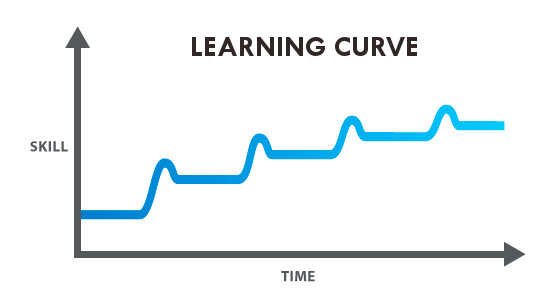
The truth about learning is that it comes in fits and starts. We learn a lot and then the learning stalls. With practice, we learn again but it will stall out again.

Studies show that learners experience plateaus in between bursts of learning.

Musicians know this all too well. And so do learners of a foreign language. They both find themselves frustrated at times when progress stalls then, after time, they experience major jumps in their progress.

The only way out of the plateau is to keep plugging away. Once you understand that learning plateaus are normal, you can accept them and push through over time. 

The challenge with the ACT and SAT learning plateaus is time. With a testing window, for most students, of about six or nine months, there isn’t enough time to push through a plateau.

Consider Tristan, a hypothetical student. Tristan might take the SAT or ACT twice, and like most students, he would likely see an increase between the first and second sitting. But if Tristan were to take the test again, he would likely plateau and not see much of a score increase. Most data shows a little increase on a third sitting, but not much.

The problem here is that by the time Tristan can learn from his mistakes and take the test a fourth time, he is faced with college application deadlines. There just isn’t much time from Tristan’s junior to senior year to push through any plateau. 

Strategically, pushing through a plateau may require experimenting with different tactics. There is some risk to messing with strategy but if the plateau remains, it might be worth considering.

Otherwise, the hope is that students understand that we all plateau with learning. Six to nine months may not be enough time to push through the SAT and ACT plateau.

Perhaps the big lesson here is that we need to continue to remind our students that they are more than a test score

For more SAT and ACT test advice, contact CROSSWALK.