Take Note: Laptop or Not?

While many agree that technology moves slowly in education–consider how little most classrooms have changed in the past century–some technology zooms. 


For example, the laptop. Now more than ever, students rely on laptops to write, access information and collaborate. Most importantly, students take notes in class knowing they can type faster than they can write. 

However, a new study suggests that taking notes on a laptop may not be the best way to comprehend and retain information. Instead, pen and paper help students remember better than a laptop. 

It seems that the act of writing things down helps cognition

Read the entire article here. 

So don’t use a laptop to take notes in class? Maybe those old classrooms had it all figured out in the first place. 

Learn more study habits with tutoring from CROSSWALK, the Monterey Peninsula’s local resource for private tutoring and SAT/ACT Prep. Read “2400 Scores: 24 Life Lessons to Demystify the SAT and Boost Your Score” by Brooke Higgins. 

If You Resolve to Get Better Grades, You Must Learn this Study Skill

What is your New Year’s resolution? Stay healthy? Make new friends? Get better grades? 


While all three resolutions are common for many teens, only one of them is actually quite easy to do. 

Staying healthy is always a challenge. Maintaining a diet and exercise regimen requires great discipline. 

Making new friends, for some people, can be equally as tough. Breaking out of your comfort zone to go out and meet people is not something that comes naturally for everyone. 

Getting good grades, on the other hand, is a resolution that anyone can tackle. It’s really easier than you think if you just think like a teacher.

Think like a teacher? How is that going to help you get better grades? 

First of all, thinking like a teacher means knowing your content so well that you can teach someone else the same content. Having to teach someone else requires that you know everything forward and backward. If you were to approach your next study session with the goal that you need to be able to teach the material, you would have to master the content. If you master the content, then the next test or assessment will be quite easy and your grade would improve. 

Second of all, thinking like a teacher also means putting yourself in your teacher’s shoes. Most teachers give fairly rigid instructions for assignments. Not only should you follow those instructions, you should think about what kinds of things your teacher would want to see from you. By following directions and anticipating what the teacher wants, you have the chance to produce something that will impress your teacher. 

Thinking like a teacher is a self-effacing act that requires some diligence. But if you are able to do it successfully, your grades will improve.

Learn more study skills by contacting CROSSWALK. CROSSWALK is the Monterey Peninsula’s local resource for academic tutoring, test prep and ACT/SAT Boot Camps. 

Read 2400 SCORES by Brooke Higgins and learn how to apply life skills to your SAT prep. 

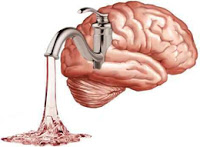
3 Ways to Refuel a Drained Brain

Alarms, homework, and close-toed shoes. Yes, summer is officially over. 

One of the drawbacks of a relaxing summer is the brain drain that occurs after months of limited academic activity. An idle brain over the summer makes for a sluggish start to the school year. 

So how do you recharge and refuel a drained brain? How can you jump into the school year focused and ready to learn? 

If your brain is drained after a summer of lethargy, here are three ways to get your brain alert, active and ahead of your peers: 

1) Read Ahead: 

Most courses follow a syllabus or a text book. If you know what is coming, read ahead and get ahead. I spent part of my summer tutoring a rising fourth grader who had missed a lot of school in third grade. Instead of reviewing what he missed in third grade, we studied what he will learn in fourth grade. When his class starts to learn about the California Missions this coming year, he will already be comfortable with the material. A little sneaky perhaps, but get comfortable with material before it is assigned. And no worries if you don’t fully understand everything you read ahead. Even coming up with questions about upcoming material will recharge a drained brain. 

2) Do Extra Work

Doing extra work sounds dreadful, right? Fear not. You only need to do enough extra work to get your summer brain refocused. For example, if your teacher assigns just the odd math problems, do the even ones as well until you achieve mastery of the subject. Once your extra work is no longer challenging, move onto to other pursuits. Be sure you do a little extra in the beginning of the year. Not only will you get ahead of your peers, you will also practice problems and questions that may appear on a test. 

3) Make Connections:

An excellent way to recharge a brain, and keep a brain working optimally, is to continually make connections. Making connections means taking one topic and relating it to another topic. For example, connect a history lesson to literature you are reading. Or connect your chemistry homework to an everyday situation. The deeper the connections you make, the more active your brain becomes. If you can weave what you have learned into what you are learning, your brain will be a tapestry of profound knowledge. 

Combat the intellectual fatigue brought on by summer by reading ahead, doing extra work and making connections. Your brain will thank you. 

Learn more ways to refuel a drained brain and get ahead in class with tutoring from CROSSWALK, Monterey’s local resource for tutoring, test prep and SAT/ACT Boot Camps.